Menus as Artifacts for Rhetorical Analysis

Getting students interested in writing is the daily battle for English teachers everywhere. I’ve found I can pique students’ interests in writing if it’s centered around food. While I have an entire folder of activities and ideas about teaching a literature class through food, my main focus this semester is incorporating that topic into a traditional introductory college composition class. At the bottom of this post I’ve included an instructional sheet I developed from an activity in the Food & Linguistics lunch group I was a member of at Wichita State University.

Currently, my students in ENGL 1001 at the University of Cincinnati are working on writing a rhetorical analysis essay, and one of the takeaways I want to emphasize for them is the usefulness of the skill (notwithstanding the somewhat uselessness of the essay itself). By forcing them to analyze something as seemingly basic as a restaurant menu, they see how these skills can be useful in real-life application, and they also gain confidence in their analytical thinking.

I honestly wasn’t expecting my class to take so well to this activity; I was worried it would end up being too theoretical for their second week of college. But, lo, it has been one of the most successful activities so far. They really jumped on different visual elements in each menu to identity purpose, audience, and genre, and the majority of the write-ups were well thought out and contained a significant amount of analysis for such an artifact. They also didn’t spend too much time summarizing the item itself, which I believe comes from their familiarity with menus and their innate understanding of what analysis is, even if they don’t always know what it looks like.
Guided Questions for Mini Menu Analysis

First-day-of-school Eve

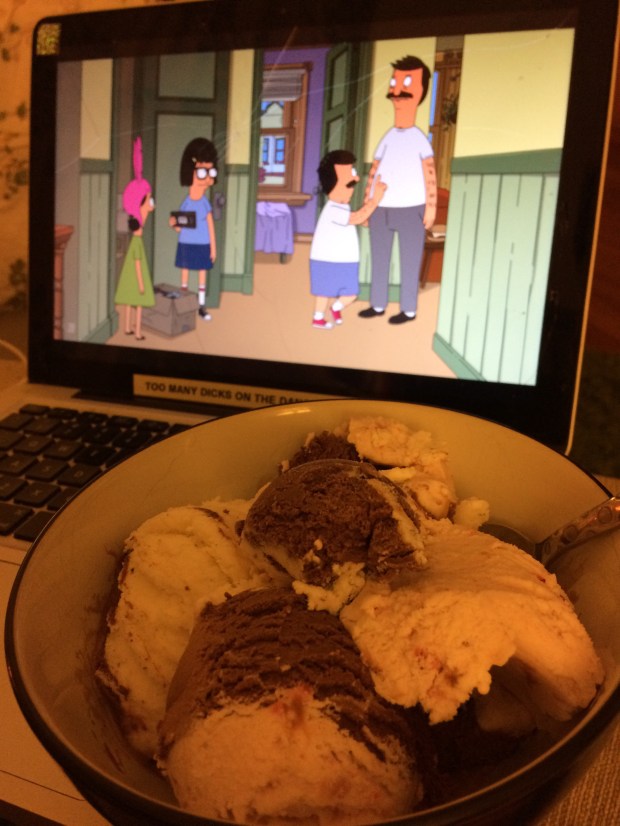
As a kid, my dad always let me have a bowl of ice cream before bed. I'd watch television and shiver happily as I scooped bites of Neapolitan, rotating between the chocolate, strawberry and vanilla in order. When I got old enough, I filled my own bowl; my parents always made fun of how much ice cream I could fit in it.

Now, on the night before I start the first year of my PhD, I'm having another bowl of ice cream. There was always something especially calming about the ice cream ritual, and even after 21 years of first days, those nerves remain. But in some way I feel like I can reach back to the six-year-old girl who waited in bed for her dad to bring her a bowl of ice cream, safe and snug and watching Taxi until she fell asleep.

Exploring homesickness through condiments

Something I’ve realized lately is just how many condiments I owned before moving to Ohio. Every night when I reach into the fridge, searching for some of Ben’s tamari or that bottle of Tapatio or that jar of Trader Joe’s harissa I bought on a trip to Wisconsin, I’m reminded that I left everything in a refrigerator in Kansas. Sometimes I just want to slam the fridge closed and open it again, hoping I’ll inspire some sort of food fantasy reverse Wizard of Oz situation and all my beloved jars will appear.

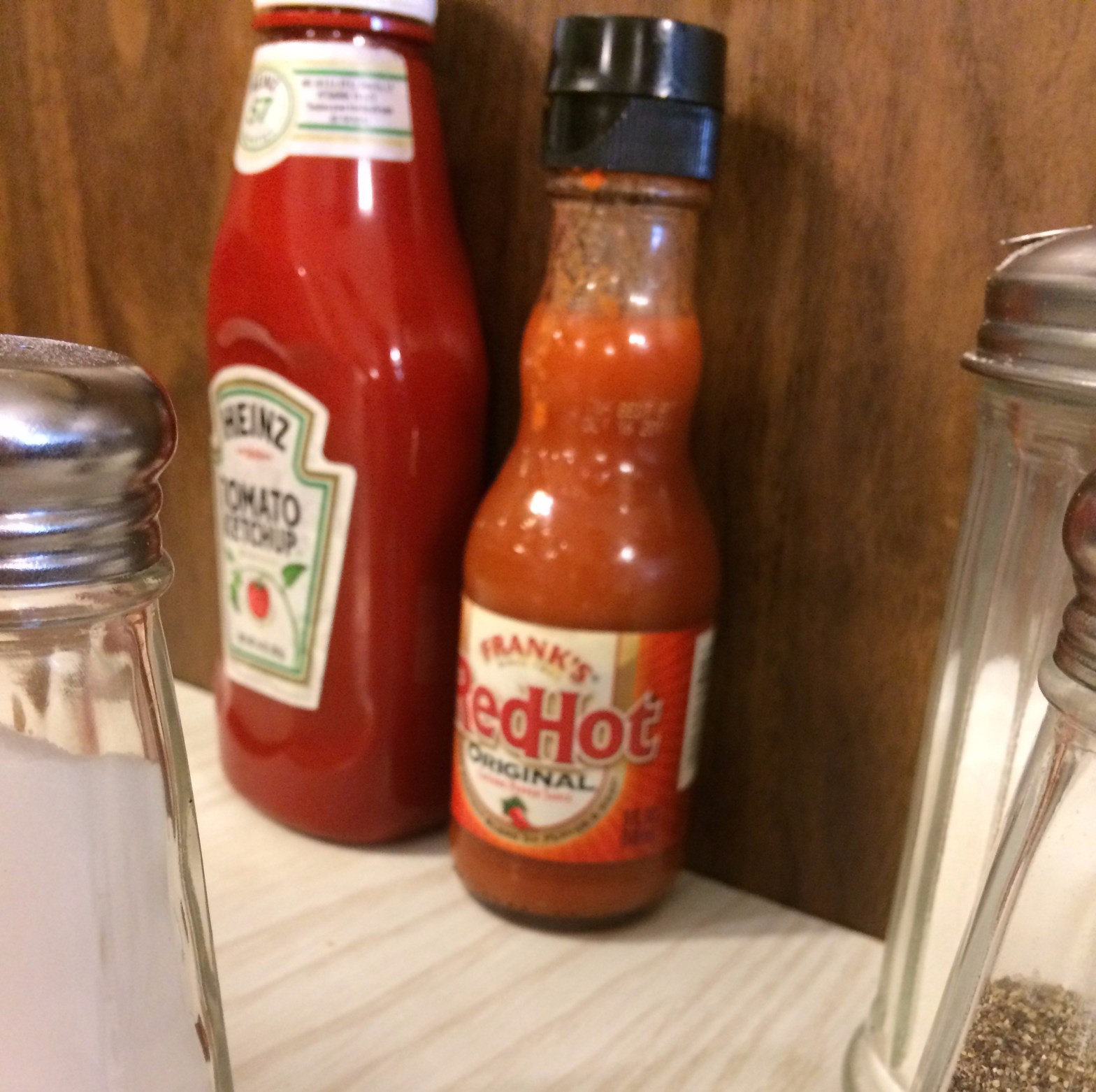
Instead, I’ve been shopping. One of my first priorities after moving was to find and replace all of those condiments, and in doing so I’ve realized how much condiments serve as totems of familiarity and reminders of home for me. Eating a breakfast sandwich at a local diner, the Proud Rooster, was the inspiration; a bottle of Frank’s Red Hot was sitting on the table, and I snapped a picture to send to my dad with the caption “they have it here too!” His response: “Good. I put that shit on everything.”

There’s something so comforting in finding a place or a person that shares a love of Frank’s. It’s different than sharing a favourite dish; condiments speak to a more personal level of attachment. They add flavor in a way that an individual is in control of, even if she wasn’t the cook of the meal. There’s a level of “doctoring-up” at play that ties the personal to the historical. While Frank’s is one of a million hot sauces (and only one of the many I keep in stock), I still associate it with my family, like some sort of family “secret” ingredient. In the same way that my dad’s joke is a long-running response to any Frank’s sighting, just having a bottle of Frank’s somehow makes me feel closer to those I’ve left.

Perhaps that’s why the loss of all my fridge condiments hit me so hard, harder than anything else about moving so far. They were a collection, a jumble of jars and containers that spoke not only to my familial ties, but to my explorations as well. I certainly didn’t grow up with harissa, or tapatio, or Maille dijon mustard. Those were additions I’d made, ones that somehow bolstered my identity as a culinary experimenter. In seeking out new flavors, I’d pushed beyond the boundaries of my Midwest upbringing to discover a side of myself that I’m just now beginning to understand—a side that is wholly fascinated with how food speaks to both personal and national cultural identity.

So I’d found those condiments, and in a hokey way some idea of who I want to be (#phdlife), only to lose them again in a 14-hour move. But even after losing them, it takes just one trip to Jungle Jim’s to replace them all. Perhaps that’s what’s so startling to me about condiments in general—they’re so important, yet so easily replaceable.

The simplest way to feel just a little bit closer to home.